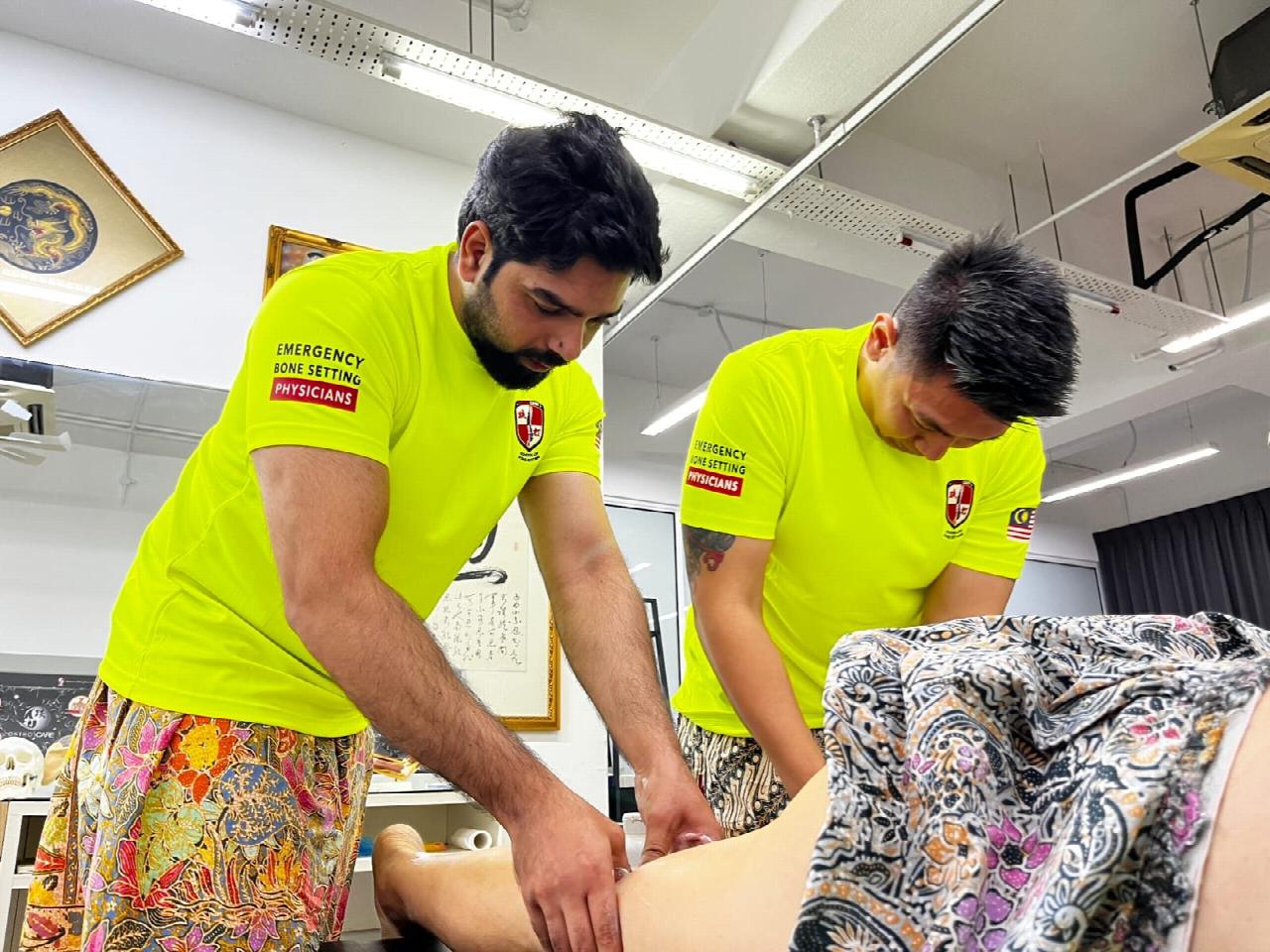
Lower back pain is one of the most common reasons people in Lahore seek hands-on musculoskeletal care. If your lower back aches when you sit too long, stiffens in the morning, or flares up after lifting something heavy, you are not alone. Most lower back pain is mechanical, not a sign of serious disease, and it often improves with movement, the right hands-on treatment, and a few changes to daily habits. This guide explains what causes lower back pain, how lower back pain relief in Lahore works at Spartan Osteo Care, and what you can safely do at home.
At Spartan Osteo Care in Allama Iqbal Town, Lahore, lead practitioner Muhammad Khurram uses Tit Tar bone setting, joint realignment, myofascial release, and spinal decompression. The aim is to ease pain and address the movement problem behind it, so it is less likely to keep coming back. Treatment is non-surgical, and every session starts with a careful assessment and red-flag screening.
What Causes Lower Back Pain?
Lower back pain rarely has a single cause. It usually develops from a mix of muscle strain, joint stiffness, posture, and everyday habits. Understanding the likely cause helps your practitioner choose the right lower back pain treatment for you, rather than applying the same approach to everyone.
Muscle and ligament strain
The most common cause of lower back pain is a strain of the muscles and ligaments that support the spine. Lifting something heavy with a rounded back, twisting suddenly, or a small slip can cause small tears in these tissues. This type of pain often comes on quickly, feels sharp when you move, and improves over days to a few weeks with gentle movement. Complete bed rest usually makes it worse, not better.
Poor posture and long hours sitting
Hours spent at a desk, driving in Lahore traffic, or looking down at a phone place steady strain on the lower back. When you sit in a slouched position for a long time, the muscles that support the spine become weak and the joints of the lower back take more load than they should. Over weeks and months, this can lead to a dull ache, stiffness in the morning, and pain that gets worse as the day goes on. Poor posture is also a major cause of the spinal misalignment covered in our guide to postural realignment and functional rehabilitation.
Weak core muscles and tight hamstrings
The deep abdominal muscles, the small muscles around the spine, and the glutes work together like a support belt for the lower back. When these muscles are weak, the spine has less protection during everyday movements. Tight hamstrings pull the pelvis out of its normal position, which adds further strain to the lower back. This combination of weak support and tightness is one of the most common patterns we see in patients with recurring lower back pain.
Stiff spinal joints and the sacroiliac joint
The lower back is made of five lumbar vertebrae, discs, joints, and nerves that work together every time you bend, lift, or twist. If one or two joints in the lower back become stiff, the joints above and below them have to move more than they should. The sacroiliac joint, where the spine meets the pelvis, can also become fixed or irritated, causing pain in the lower back and buttock that is often mistaken for a disc problem. A careful hands-on assessment can tell these patterns apart, because each one responds to a different approach.
Disc-related pain and sciatica
Less commonly, lower back pain is linked to a bulging or herniated disc pressing on a nerve. This usually causes pain that travels down one leg, along with numbness, tingling, or weakness. If your pain follows this pattern, read our guide to non-surgical relief for sciatica and lumbar disc compression. Disc-related pain needs a different treatment plan from ordinary muscle strain, which is why evaluation comes first.
Age-related changes
With age, the discs lose some of their water content and the joints of the spine can develop wear and tear. Most lower back pain — roughly 85–90% — is non-specific, caused by muscle strain, ligament stress, poor posture, and prolonged mechanical loading, as explained in this guide to lower back pain causes and relief. This does not mean pain is unavoidable. Many people with age-related changes on a scan have no pain at all, and many people with pain have normal scans. What matters is how the spine moves and how strong the supporting muscles are, both of which can be improved.
Lower Back Pain Relief in Lahore: How Treatment Works at Spartan Osteo Care
Lower back pain relief in Lahore at Spartan Osteo Care is a hands-on, non-surgical approach. The practitioner assesses how the lower back, pelvis, and hips move together, then uses gentle manual techniques to restore movement and ease muscle tension.
Clinical evaluation comes first
Your first visit starts with a detailed history and a hands-on assessment. Muhammad Khurram will ask when the pain started, what makes it better or worse, whether pain travels into the leg, and whether you have had an injury, numbness, or weakness. He will then check how your lower back, pelvis, and hips move, and test the muscles and joints involved. This evaluation matters, because pain from a stiff joint needs a different approach from pain linked to a disc problem or a nerve. The assessment also screens for red flags that need urgent medical care rather than manual treatment.
Joint realignment and Tit Tar bone setting
Joint realignment is the core of Tit Tar, the traditional bone-setting practice at Spartan Osteo Care. It uses controlled, evidence-informed manual adjustments to restore balanced movement to stiff joints of the lower back and pelvis, rather than forcing a joint into place. When a stiff joint starts moving again, bending and standing usually feel easier. Tit Tar is a traditional practice, and at Spartan Osteo Care it is combined with modern anatomical assessment and red-flag screening, so it is used only when it is appropriate for your condition.
Myofascial release and deep tissue massage
Myofascial release is slow, sustained pressure on tight muscles and fascia, the tissue around them. The muscles most often involved in lower back pain are the erector spinae along the spine, the quadratus lumborum at the side of the lower back, and the gluteal muscles. When these muscles relax, the lower back feels less tight and movement becomes freer. Clinical deep tissue massage works on the same tissues with firmer, targeted pressure, and is often combined with joint work in the same session.
Spinal decompression
When a disc or nerve is involved, gentle spinal decompression techniques aim to reduce pressure on the affected area and restore space around the nerve. This is a slow, controlled part of treatment, not a sudden or forceful movement. It is used alongside joint and muscle work, and only after the assessment shows it is suitable for you.
What to expect in your first session
A session at Spartan Osteo Care is a structured clinical visit of around 45 minutes. It starts with the assessment, followed by the hands-on treatment your practitioner has chosen for your pattern of pain. Many patients notice easier movement after the first session, but lasting improvement usually takes a short course of visits, along with the home exercises below. Your practitioner will explain what he found, what he did, and what to do next, including when to come back and when to seek other medical care.
Safe Exercises for Lower Back Pain at Home
For most lower back pain, staying active is more helpful than resting in bed. Gentle movement keeps the muscles working, prevents stiffness, and supports recovery. Cleveland Clinic notes that simple exercises and good posture can help most cases of low back pain, which is usually caused by overstretched or injured muscles supporting the lower back. These exercises are commonly recommended for lower back pain, and they are suitable for most people with mild to moderate pain. Move slowly, breathe normally, and stop any exercise that causes sharp pain or pain travelling down the leg.
Cat-cow stretch
Start on your hands and knees. Slowly arch your back upward like a cat, then let it dip downward like a cow. Move smoothly between the two positions for 10 slow rounds. This improves spinal flexibility and eases stiffness.
Knee-to-chest stretch
Lie on your back with your knees bent. Bring one knee gently toward your chest and hold it for 20 to 30 seconds, then switch sides. Repeat three times on each side. This stretches the lower back and glutes.
Pelvic tilt
Lie on your back with your knees bent and feet flat on the floor. Gently flatten your lower back against the floor by tightening your abdominal muscles, hold for five seconds, then relax. Repeat 10 times. This wakes up the deep core muscles that support the spine.
Glute bridge
Lie on your back with your knees bent. Press through your heels and lift your hips until your body forms a straight line from shoulders to knees. Hold for five seconds, then lower slowly. Repeat 10 times. This strengthens the glutes and takes load off the lower back.
Walking
Short, regular walks are one of the most useful things you can do for lower back pain. Walking keeps the spine moving, improves blood flow to the muscles, and prevents the deconditioning that comes with prolonged rest. Aim for a gentle 20 to 30 minute walk most days, as pain allows.
What to avoid
Avoid sudden twisting movements, lifting heavy weights with a rounded back, and prolonged bed rest. Avoid high-impact exercise and deep forward bends until your pain has settled. If an exercise makes your pain worse or sends pain down your leg, stop and discuss it with your practitioner.
Lower Back Pain From Sitting All Day
If your lower back pain is worst after a long day at a desk, sitting is likely a major part of the problem. Long sitting weakens the core muscles, tightens the hip flexors, and loads the discs of the lower back. A few changes can make a real difference.
Stand up and move for two to three minutes every 30 to 45 minutes. A short walk to get water or a few gentle stretches is enough. Place a small rolled towel or lumbar support behind your lower back, keep your screen at eye level, and keep your feet flat on the floor. Avoid sitting on a soft sofa with a laptop for hours, which forces the lower back into a rounded position. These changes will not fix a stiff joint on their own, but they reduce the daily load that keeps the pain coming back.
When Lower Back Pain Needs Urgent Medical Care
Most lower back pain is not dangerous, but some symptoms need prompt medical evaluation. Seek urgent care if you notice any of the following, and do not try to treat them with home exercises or manual therapy alone.
- Pain after a significant fall, accident, or injury
- Numbness, tingling, or weakness in one or both legs, or foot drop
- Loss of bladder or bowel control
- Fever, unexplained weight loss, or a history of cancer along with new back pain
- Pain that is severe, constant, and getting worse over days, or pain that wakes you at night
- Back pain that lasts longer than four to six weeks without improvement
A qualified medical evaluation can rule out a fracture, infection, or other serious cause. Manual treatment is appropriate only after these possibilities have been considered.
What Makes Spartan Osteo Care Different
Most back pain care in Lahore is physiotherapy, injections, or surgery. Spartan Osteo Care offers a different route: hands-on joint realignment through Tit Tar, combined with myofascial release and spinal decompression, all under one practitioner. The focus is on finding the mechanical cause of your pain, whether it is a stiff joint, a fixed sacroiliac joint, or a muscle imbalance, and treating that cause directly. Every patient is screened for red flags first, and treatment is non-surgical and drug-free. If your condition needs a doctor, a scan, or another kind of care, you will be told so plainly.
Spartan Osteo Care is located at 452 Gulshan Block, Allama Iqbal Town, Lahore, and serves patients from Gulberg, Model Town, Johar Town, DHA, and Bahria Town. To book an assessment for lower back pain, message on WhatsApp at +92 325 6444817.
Need Expert Osteopathic Care in Lahore?
Consult with lead practitioner Muhammad Khurram at Spartan Osteo Care for Tit Tar bone setting and non-surgical lower back pain relief.
Frequently Asked Questions
How long does lower back pain usually last?
Most episodes of muscle-related lower back pain improve within a few days to a few weeks with gentle movement and the right treatment. Pain that lasts longer than four to six weeks, or keeps coming back, should be assessed properly to find the underlying cause.
Can lower back pain be treated without surgery?
Yes, most lower back pain does not need surgery. Hands-on treatment, exercise, and posture correction help many people, and surgery is usually considered only when there is a clear structural problem that has not responded to conservative care, or when there are serious nerve symptoms. A proper assessment is the first step.
How can I relieve lower back pain at home?
Stay gently active, avoid prolonged bed rest, and try the cat-cow stretch, knee-to-chest stretch, pelvic tilt, and glute bridge described above. A short walk most days also helps. Use heat on tight muscles if it feels good, and avoid heavy lifting and sudden twisting until the pain settles.
Is Tit Tar safe for lower back pain?
Tit Tar, or traditional bone setting, uses controlled manual adjustments to restore movement to stiff joints. At Spartan Osteo Care it is used only after a clinical assessment and red-flag screening, and only when it is appropriate for your condition. It is not suitable for everyone, for example after a fracture or when there are serious nerve symptoms, which is why the assessment matters.
When should I see a doctor for lower back pain?
See a doctor promptly if you have numbness or weakness in the legs, loss of bladder or bowel control, fever, unexplained weight loss, pain after a serious injury, or pain that is severe and getting worse. You should also seek care if the pain has not improved after four to six weeks.
Does Spartan Osteo Care treat lower back pain from sitting all day?
Yes. Pain from prolonged sitting is one of the most common patterns treated at the clinic. Treatment focuses on restoring movement to stiff spinal and pelvic joints, releasing tight muscles, and strengthening the core, along with advice on desk setup and movement breaks.