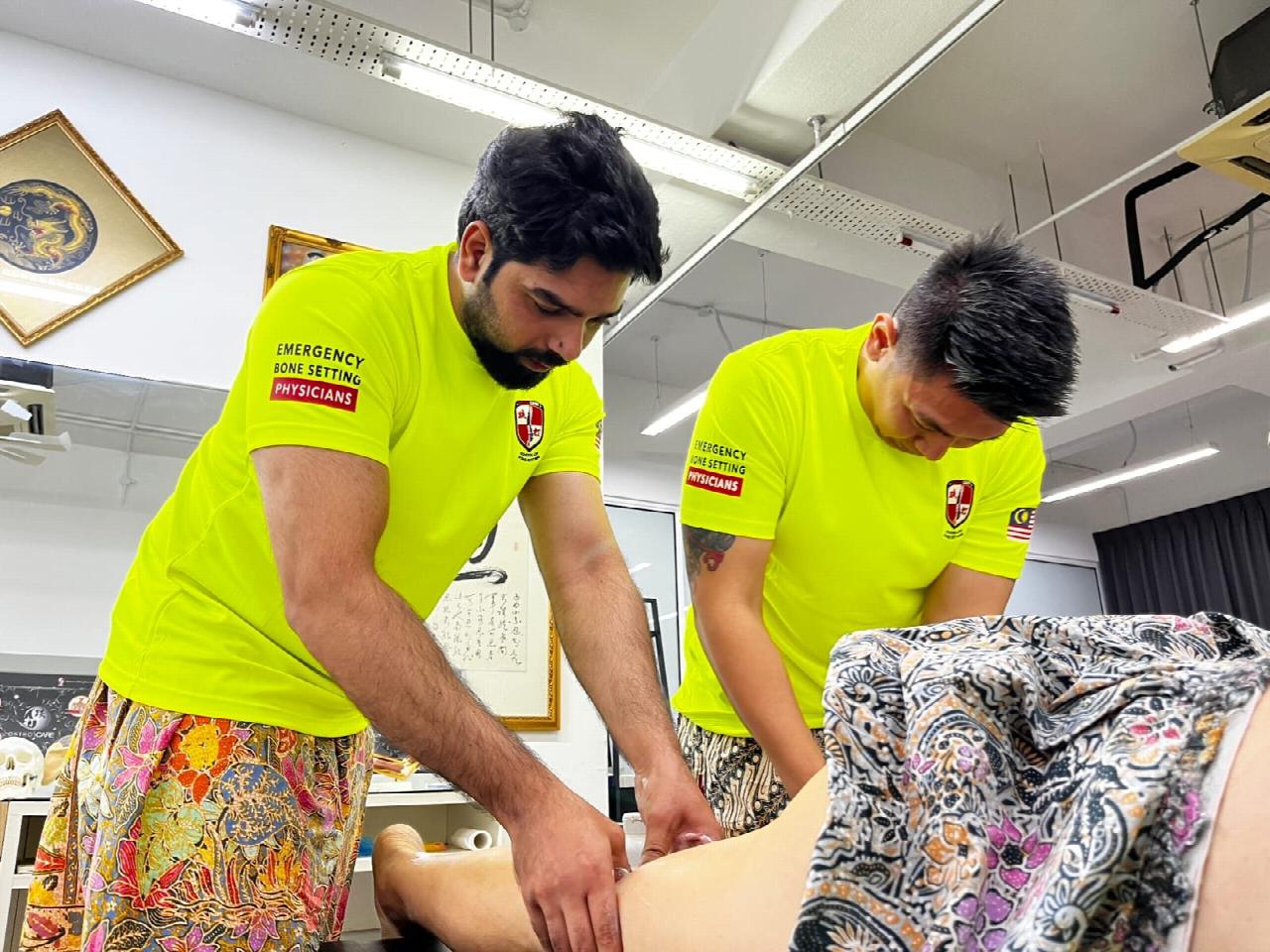
Muscle Stiffness Relief in Lahore: Deep Tissue Massage and Tit Tar Bone Setting That Works
Muscle stiffness relief in Lahore starts with understanding what is actually stiff: in most cases it is not one tight muscle, but a combination of shortened soft tissue, irritated fascia, and a joint that has stopped moving freely. Gentle movement, heat, and deep tissue massage can ease the feeling of tightness, and when stiffness keeps returning to the same spot, Tit Tar bone setting at Spartan Osteo Care in Allama Iqbal Town addresses the joint restriction underneath it — without surgery and without long-term medication.
If you wake up stiff, feel tight after a desk day, or find your neck and shoulders locking up, this guide explains what causes muscle stiffness, what deep tissue massage can and cannot do, how Tit Tar bone setting is different, and when stiffness is a sign to get checked promptly.
What Muscle Stiffness Actually Is
Muscle stiffness is the feeling that a muscle will not lengthen, relax, or move through its normal range. It is a symptom, not a diagnosis. The same feeling can come from several different causes, and the right care depends on which one is driving it.
When a muscle stays contracted for hours — at a desk, behind the wheel, or asleep in an awkward position — blood flow slows and the tissue feels tight and tender. Fascia, the connective tissue around muscle, can also lose its normal glide, so movement feels restricted even when the muscle is not injured. Often the real problem sits in the joint: a stiff spinal segment or restricted shoulder or hip joint forces surrounding muscles to guard and tighten to protect it. Until that joint moves normally, the muscles keep bracing, and stretching alone gives only temporary relief.
That is why stiffness that keeps returning to the same place deserves a proper assessment, not repeated forceful stretching. The question is not only “which muscle is tight?” but “why does it keep tightening?”
Why Muscles Get Stiff in Lahore
Stiffness has the same causes everywhere, but daily life in Lahore adds a few familiar triggers:
- Long sitting hours: Desk work, study, and screen time keep the neck, shoulders, and hip flexors in one shortened position for hours. Muscles adapt to the position they are held in, so they feel stiff when you finally try to move.
- Driving and commuting: Long drives in traffic, with the shoulders raised and the neck held forward, load the upper trapezius and the muscles at the base of the skull.
- Gym and sudden exertion: Heavy training after a gap, or a sudden increase in load, leaves muscles sore and stiff for a day or two. This delayed-onset soreness usually settles on its own.
- Sleep position: A flat or unsupportive pillow, or sleeping on the stomach with the neck turned, is a classic cause of waking up with a stiff neck.
- Stress: Stress raises muscle tension, especially in the neck, shoulders, and jaw. Many people do not notice they are holding tension there until the end of the day.
- Old injuries and poor posture: An old strain, a past fall, or months of rounded shoulders change how joints move, and the muscles around them compensate by staying tight.
Occasional stiffness after a long day is normal. Stiffness lasting more than a few days, keeps returning, or is paired with pain, numbness, or weakness needs a clinical look.
Deep Tissue Massage for Muscle Stiffness: What It Can Do
Deep tissue massage is a therapeutic technique that uses slow, sustained pressure to reach the deeper layers of muscle and connective tissue. Unlike a relaxation massage, which works mainly on the surface, deep tissue work targets the specific bands and knots — trigger points — where tension has settled.
Here is what it can reasonably offer:
- Reduced feeling of tightness: Targeted pressure and slow strokes can help tight areas feel looser and more comfortable, particularly around the neck, shoulders, upper back, and hips.
- Better movement: When the surrounding soft tissue relaxes, joints often move more freely for a period afterwards, which makes stretching and daily movement easier.
- Improved circulation: Pressure and movement increase local blood flow, supporting recovery after exertion.
- Stress relief: Slow, firm work calms the nervous system, which in turn reduces the muscle guarding driven by stress.
Be honest about the limits: the evidence for massage is strongest for short-term symptom relief. The US National Center for Complementary and Integrative Health notes that massage has been studied for low-back, neck, and shoulder pain, but the evidence quality is often limited and benefits are usually short term. WebMD notes that the American College of Physicians lists massage therapy as a remedy for temporary back pain, and Healthline reports a 2014 study in which deep tissue massage reduced pain in people with chronic low back pain. Massage is not a cure for pain, injury, or postural problems, and it cannot permanently correct a joint that is not moving properly.
Some soreness for a day after a deep session is common. Sharp pain during treatment, bruising, or worsening pain afterwards is not normal — mention it to the practitioner.
When Stiffness Is Not Just a Muscle Problem
Massage works on muscle and fascia. But when stiffness keeps returning to the same spot despite massage and stretching, the cause is often mechanical: a joint that has lost its normal movement.
A spinal segment that is not gliding properly, a rib that is restricted, or a shoulder or hip joint with limited play will make the muscles around it tighten protectively. You can massage those muscles every week and they will keep tightening, because they are doing a job — stabilising a joint that is not moving as it should. In that situation, the lasting answer is to restore the joint’s movement first, and then let the muscles relax.
This is the gap most Lahore spa and massage menus do not cover. A spa session is priced by the hour and aimed at relaxation: it does not assess which joint is restricted, whether the stiffness is muscular or mechanical, or when a symptom needs medical care. Clinical care starts with that assessment.
Deep Tissue Massage vs Tit Tar Bone Setting
Both are hands-on, non-surgical approaches, but they work on different structures and answer different questions:
| Approach | Works on | Best for |
|---|---|---|
| Deep tissue massage | Muscle and fascia | Tight, knotted muscles; stress-related tension; post-exercise soreness |
| Tit Tar bone setting | Joints, alignment, and surrounding soft tissue | Stiffness that keeps returning to the same spot; restricted joint movement; posture-related pain |
| Combined care | Joint first, then soft tissue | Chronic stiffness where both joint restriction and muscle guarding are present |
Tit Tar, traditional bone setting, is a hands-on manual therapy that realigns misaligned joints, vertebrae, and soft tissues through controlled, precise movements. At Spartan Osteo Care it is practised as evidence-based manual therapy rather than forceful cracking: the practitioner first palpates the spine and joints to locate the restricted segment, then applies a controlled adjustment with deep tissue fascial release to restore movement. Read more in our guide to Tit Tar traditional bone setting.
The distinction matters for expectations. Massage can make stiff muscles feel better, often quickly. Tit Tar aims at the mechanical cause when a joint is behind the stiffness. Neither is a guaranteed cure, and neither replaces medical care when red-flag symptoms are present.
What a Muscle Stiffness Session Looks Like at Spartan Osteo Care
A session at our clinic in Allama Iqbal Town, Lahore, begins with assessment, not treatment. Muhammad Khurram, our Tit Tar and bone setting practitioner, takes a history of the stiffness and any injury, then examines posture, range of motion, and the joints and muscles involved.
Based on that assessment, treatment may combine:
- Joint mobilisation and Tit Tar adjustment: Controlled, precise movements to restore normal glide to restricted spinal segments or peripheral joints.
- Deep tissue fascial release: Sustained pressure on tight muscle bands and fascia around the restricted joint, to reduce guarding and restore comfortable movement.
- Spinal decompression where indicated: Gentle decompression to relieve pressure on compressed nerve roots — the same principle used in our sciatica and lumbar decompression care.
- Movement and posture guidance: Simple exercises and sitting and sleeping advice so the stiffness does not return the next day.
Stiffness in the neck often travels with the problems in our neck pain relief guide, and lower-back stiffness overlaps with the patterns in our lower back pain relief guide. Where posture is the driver, our postural realignment guide applies. Each case is assessed on its own, and the plan is explained before any hands-on work begins.
A 5-Minute Daily Routine to Loosen Stiff Muscles
This five-minute routine suits most people with ordinary stiffness. Move gently, breathe normally, and stop if anything causes sharp pain.
1. Heat first (2 minutes). A warm compress or warm shower on the stiff area helps muscles relax before you stretch. Use ice only after a fresh injury or where there is swelling.
2. Neck and shoulder release (1 minute). Roll your shoulders slowly backwards ten times, then forwards ten times. Tilt your ear towards one shoulder until you feel a gentle stretch, hold for 15 to 20 seconds, and repeat on the other side. Keep the movement slow — never force it.
3. Chest opening (1 minute). Stand in a doorway, place your forearms on the frame, and step gently forward until you feel a stretch across the chest. Hold for 20 to 30 seconds. This counters the rounded-shoulder position of desk work.
4. Hips and lower back (1 minute). Seated, cross one ankle over the opposite knee and lean gently forward until you feel a stretch in the hip. Hold for 20 to 30 seconds per side, then stand and walk for a minute — movement after sitting is part of the treatment.
Repeat once or twice a day, and take a short movement break every 30 to 60 minutes at your desk. Consistency matters more than intensity: a few gentle minutes daily beats one aggressive session a week.
What to Avoid When Your Muscles Are Stiff
- Forcing deep stretches: Aggressive stretching on already tense tissue can increase discomfort. Stretch to mild tension, never to pain.
- Staying in one position: Hours without moving is what created the stiffness. Break it up, even briefly.
- Sleeping on your stomach: It twists the neck for hours. Sleeping on your back or side with a supportive pillow is kinder to the neck.
- Ignoring a pattern: Stiffness that always returns to the same shoulder, the same side of the neck, or the same hip is a pattern worth assessing, not a habit to live with.
- Strong self-adjustment: Do not try to crack your own neck or back forcefully. A wrong movement on an already irritated joint can make things worse.
Red Flags: When Stiffness Needs Medical Attention Promptly
Most muscle stiffness is not dangerous, but some signs should not wait. Seek qualified medical evaluation promptly if you notice:
- Stiffness or pain after a fall, accident, or direct injury, especially if movement is severely limited
- Numbness, tingling, or weakness in an arm, hand, leg, or foot
- Stiffness with fever, unexplained weight loss, or pain that is worse at night
- Loss of bladder or bowel control, or numbness in the saddle area — seek urgent care
- Stiffness that does not improve after a week or two of gentle care, or keeps getting worse
- A history of fracture, osteoporosis, cancer, or long-term steroid use with new stiffness or pain
Traditional bone setting and massage are not substitutes for medical assessment when these signs are present. A responsible practitioner will refer you for medical evaluation rather than treat through a red flag.
Frequently Asked Questions
How can I relieve muscle stiffness fast?
Apply warmth for 10 to 15 minutes, move gently through a comfortable range, and take a short walk to restore circulation. Shoulder rolls, gentle neck tilts, and a doorway chest stretch often ease the feeling within minutes. Fast relief is usually temporary — if the same stiffness returns daily, its cause needs assessment.
Why are my muscles always stiff?
The most common reasons are prolonged sitting, poor sleep position, stress-related tension, and a joint that is not moving freely, which keeps the surrounding muscles guarding. When stiffness always returns to the same spot despite stretching and massage, a restricted joint is often behind it.
Is deep tissue massage good for stiff muscles?
Deep tissue massage can help stiff muscles feel looser and move more comfortably, especially for tension in the neck, shoulders, and back. The evidence is strongest for short-term relief. It works on muscle and fascia, so it is most useful when the problem is genuinely muscular rather than a joint restriction.
What is the difference between deep tissue massage and Tit Tar bone setting?
Deep tissue massage works on muscle and fascia with slow, sustained pressure. Tit Tar bone setting works on joints and alignment, using controlled manual adjustments to restore normal joint movement, combined with soft-tissue release. In practice they complement each other: joint movement first, then the muscles can finally relax.
How many sessions will I need?
It depends on the cause and how long the stiffness has been present. Some people feel a clear difference after one session; long-standing stiffness with a joint restriction usually needs a short course plus the daily routine at home. Your practitioner should explain the expected plan after the first assessment.
Can I get muscle stiffness treatment in Lahore without surgery?
Yes. Most muscle stiffness is managed without surgery through assessment, manual therapy, deep tissue work, movement, and posture correction. Surgery is not a treatment for ordinary muscle stiffness. If a serious underlying cause is suspected, medical evaluation comes first.
Book an Assessment in Lahore
If stiffness keeps returning to the same place, or stretching and massage only help for a day, it is worth finding out why. At Spartan Osteo Care, 452 Gulshan Block, Allama Iqbal Town, Lahore, Muhammad Khurram assesses the joint and the muscle together, so treatment targets the cause, not only the tightness.
Book your appointment on WhatsApp — message us on +92 325 6444817 and describe the stiffness and how long it has been there. We will confirm your slot and advise on the right next step. No surgery, no long-term medication — just a clear assessment and a plan you can understand.